
















There is a moment in almost every small bathroom renovation where the bathtub becomes the problem. The room is tight, the options seem limited, and the instinct is to rip the tub out entirely and replace it with a walk-in shower. It is a reasonable instinct. But it is also, in many cases, the wrong one. A bathtub adds lasting value to a property, meets the needs of families with young children, and offers something a shower fundamentally cannot: a proper soak at the end of a long day. The real question is not whether to keep the bath; it is how to do it intelligently.
The good news is that the market for compact bathtub designs has grown significantly over the past decade. Manufacturers have responded to the reality that most UK bathrooms are not particularly large, and the results are genuinely impressive. With the right approach, a well-chosen tub can transform a small bathroom rather than overwhelm it.
Rethinking What a Small Bathroom Can Do
The first shift is mental. Small bathrooms are often treated as a set of constraints, not enough space for this, too narrow for that. But the best small bathroom renovation ideas start by treating the space as a design problem rather than a limitation. Every well-designed small room is the result of someone making deliberate decisions about what goes where and why. A bathroom is no different.
Once you approach the space with that mindset, the possibilities open up. Corner placements, compact freestanding tubs, and smart plumbing configurations all become tools rather than compromises. The challenge is knowing which tool fits your specific room.
Know Your Dimensions Before Anything Else
Before looking at any bath options, measure the room accurately. Not just the floor plan, but the ceiling height, the position of windows, where the soil pipe exits, and where the existing hot and cold supplies sit. These factors will define which installation options are genuinely available to you and which will require costly reconfiguration.
It is also worth thinking about traffic flow. A bathroom that is technically large enough to fit a tub can still feel wrong if the tub blocks access to the basin or makes the door feel awkward to open. The goal is not just to fit everything in; it is to make the room feel considered.
Corner Tubs: The Space-Smart Choice
For many compact bathrooms, the corner is the most efficient location for a bath. Corner bathtubs for small bathrooms are designed to occupy the triangular or square space where two walls meet, ground that would otherwise be unused or awkward to tile around. The result is a tub that feels integrated into the room rather than dropped into it.
Corner tubs come in a range of sizes, and many are designed to feel more spacious than their footprint suggests. The angled entry means the widest point of the tub is at the centre rather than along one wall, which actually gives the bather more room to move than a straight bath of similar length.
Glass Screens Over Curtain Rails
One detail that makes a significant visual difference in a corner bath installation is the choice of screen. A frameless glass screen keeps the room feeling open. A shower curtain, by contrast, adds visual weight and makes even a generous room feel smaller when drawn. For a compact space, the screen is not just an aesthetic choice; it is a practical one that affects how the entire room reads.
Freestanding Baths: A Counterintuitive Option
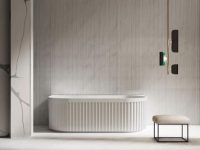
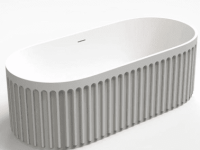
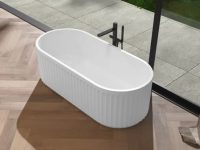
The assumption that freestanding baths only work in large bathrooms is one of the most persistent myths in bathroom design. A well-proportioned luxury bath tub from us, placed against a wall or in a corner, can work in a room that is considerably smaller than most people would expect. The key is proportion: the tub must be the right length and width for the space, and everything around it must be kept deliberately minimal.
What freestanding baths offer in a small room is something built-in models cannot: visible floor space beneath the tub. This unbroken floor line makes the room feel more open, even when the square footage has not changed. If the floor is a strong material, a large-format stone tile or a polished concrete finish, a freestanding bath frames it rather than hiding it.
Choosing the Right Length
Most standard baths run at 1700mm in length. For a compact room, look at options in the 1400mm range. These shorter tubs are not uncomfortable; they are designed with a steeper back angle that makes them feel natural to use. Paired with an elegant tap set and a clean wall finish, a short freestanding bath can become the defining feature of a small bathroom rather than its biggest problem.
Planning a Tiny Bathroom Bathtub Installation
The installation itself is where many small bathroom projects run into difficulty. Tiny bathroom bathtub installation is not simply a matter of sliding the tub into position and connecting the plumbing. In a compact space, every decision has a knock-on effect on the others.
Plumbing Position Matters
Where the waste pipe exits the floor or wall determines a great deal about where the bath can realistically sit. Moving a soil pipe is possible but expensive. In most projects, the smarter approach is to choose a bath that works with the existing waste position rather than reconfiguring the pipework around a preferred tub location.
Wall-Mounted Taps as a Space Strategy
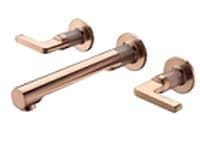
Tap choice has a measurable effect on how much usable space a bath occupies. Deck-mounted taps sit on the rim of the bath and add width to the overall profile. Wall-mounted taps, by contrast, sit flush against the wall above the bath and leave the rim entirely clear. In a compact bathroom, this distinction is not trivial; it can make the difference between a bath that feels squeezed and one that feels right.
The Basin Question
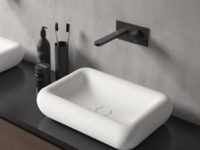
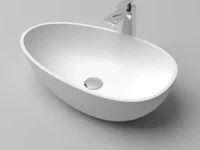
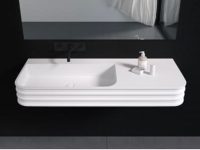
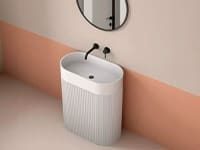
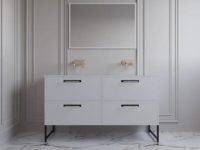
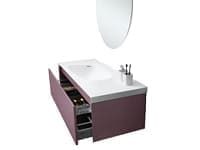
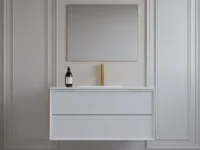
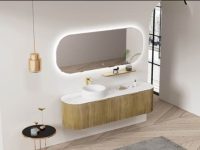
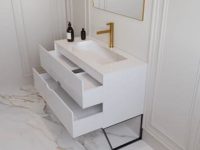
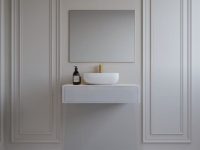
Once the bath position is resolved, the basin becomes the next significant decision. In a small bathroom, these two fixtures have to coexist without the room feeling cluttered. We offer a variety of modern sinks for small bathrooms that are specifically designed to address this: they project less from the wall, occupy a narrower footprint, and keep the floor area around them clear. A wall-hung basin with no pedestal is particularly effective, as the unbroken floor line beneath it reinforces the sense of space throughout the room.
Material consistency between the bath and basin matters too. A room where both fixtures share the same material language, the same stone finish, the same tone, feels designed. A room where they do not share anything visually feels assembled. In a small space, that distinction is amplified.
Lighting and the Perception of Space
No amount of careful fixture selection will make a small bathroom feel generous if the lighting works against it. Shadows compress space; even light expands it. Recessed ceiling lighting eliminates the visual clutter of pendant fittings or surface-mounted boxes. A backlit mirror above the basin adds a second layer of illumination that removes shadows from the face and gives the room real depth.
Keep the colour palette simple and consistent. A single light tone across walls, floor, and ceiling, with the bath and basin providing the material interest, creates a room that feels far more spacious than one broken up by contrasting colours or busy tile patterns.
Final Thoughts
A small bathroom does not have to mean a shower-only space. With the right tub, the right installation planning, and a clear eye for proportion, a bath can sit comfortably in even a compact room, and make it better. The range available today, including everything from slimline freestanding models to purpose-built corner tubs, means there is a genuinely good solution for almost every floor plan. Explore the collections at RNK to find bathtub and basin options that bring both quality and spatial intelligence to smaller spaces.
