










It is the kind of question that only comes up at the most inconvenient moment, usually when you are standing in a bathroom showroom holding a tape measure you should have brought three weeks ago, or when a replacement seat arrives and turns out to be subtly but definitively the wrong shape. Toilet seats are one of those fixtures that most people assume follow a universal standard. In the UK, the picture is a little more nuanced than that, and understanding it properly before you buy can save a significant amount of frustration.
Standard Toilet Seat Dimensions
There is no single universal toilet seat size in the UK, but there is a broadly consistent range that covers the majority of toilets sold here. Standard toilet seat dimensions for an oval pan typically fall around 430mm to 470mm in length and 340mm to 380mm in width. D-shaped pans, where the rear of the seat is flat rather than curved, tend to be slightly shorter and have become the dominant shape in contemporary bathroom design.
The important word, however, is ‘broadly’. Imported toilets, designer pans, older models, and some specialist products deviate meaningfully from these norms. A seat that looks right can still be wrong once it is out of the packaging and on the floor in front of the pan. This is why measurement is always the right starting point.
Do Toilet Seat Sizes in the UK Vary by Brand?
Toilet seat sizes in the UK are not universally consistent across manufacturers. Armitage Shanks, Ideal Standard, Roca, and Villeroy and Boch all produce pans with slightly different profiles, and a seat designed to fit one brand’s toilet may not fit another’s, even in the same shape category.
Older UK toilets, particularly those installed before the 1990s, often have pan profiles that do not match anything currently in production. Standard replacement seats will frequently not fit. In these cases, specialist suppliers who stock seats for older and discontinued toilet models are the best resource. It is also worth considering that an older toilet may be approaching the end of its useful life, in which case replacing the entire pan rather than searching for a compatible seat may be the more practical long-term decision.
For this reason, the safest purchase is always directly from the original toilet manufacturer. If the original brand is unknown, taking your three measurements to a specialist retailer is the next best option. Guessing from photographs rarely ends well.
How to Measure Your Toilet Pan?
Knowing how to measure toilet seat size accurately takes a few minutes and requires nothing more than a tape measure. There are three dimensions that matter.
Length
Measure from the centre of the bolt holes at the rear of the pan to the front edge of the bowl. Do not measure from the back of the existing seat; seats vary in their overhang, and this can give you a misleading figure. The measurement you need is from the pan itself.
Width
Measure across the widest point of the bowl opening. This is typically the widest part of the oval or D-shape, not the outer edge of the pan rim.
Bolt Hole Spacing
Measure the distance between the two bolt holes at the rear. In the UK, the most common centre-to-centre spacing is 155mm, but this varies, particularly on older or imported toilets. This measurement is critical for toilet seat compatibility and is often the one that catches people out, even when the length and width seem to match.
Shape of the Seat and Pan
Beyond measurements, shape is the other factor that determines fit. An oval seat will not fit a D-shaped pan, and a D-shaped seat will not fit an oval pan, regardless of how close the dimensions appear on paper. The profile of the seat must follow the profile of the pan rim precisely to sit correctly and seal hygienically.
The easiest way to confirm the shape of an existing toilet is to photograph it from directly above. An oval or teardrop outline confirms a standard oval pan. A flat rear edge confirms a D-shape. If in any doubt, measure the depth from the bolt holes to the front of the pan and compare it to the width; a significantly longer depth usually indicates an oval.
Wall-Hung Toilets
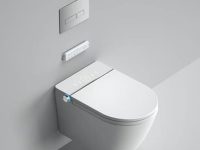
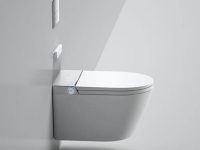
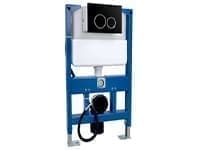
A wall-hung toilet in the UK from us follows the same principles when it comes to seat sizing. The pan shape, almost always D-shaped in contemporary wall-hung designs, and the bolt hole spacing determine which seat fits. The installation height of the pan does not affect seat selection; that is determined during the cistern frame installation and is separate from the seat specification.
Wall-hung toilets are typically sold as part of a suite that includes the specified seat, which simplifies the process considerably. If the seat needs replacing after the fact, the same measurement approach applies as with any floor-standing pan.
What Else to Consider When Replacing a Seat
Once you have the right dimensions and shape confirmed, buying replacement toilet seats involves a few additional decisions that are worth thinking through.
Fixing Systems
Top-fixing bolts, inserted from above the seat and tightened from beneath the pan, are the most common system in UK bathrooms. Some slimmer contemporary pans use a bottom-fixing system instead. Confirm which system applies to your toilet before purchasing, as they are not interchangeable.
Hinge Quality
Soft-close hinges have become essentially standard on quality seats. They prevent the seat from slamming against the pan, which protects both the seat and the porcelain over time. Quick-release hinges are a separate but equally useful feature; they allow the entire seat to be lifted off for cleaning around the hinge area, which is otherwise one of the harder spots to keep hygienic.
Smart Toilet Seats
If the goal is an upgrade rather than a like-for-like swap, it is worth understanding how a smart toilet seat in the UK from us differs from a standard replacement. These seats integrate bidet wash functions, heated seating, warm air drying, and, in some models, ambient night lighting. They require a nearby electrical socket and are generally designed for D-shaped pans. Compatibility is more specific with smart seats than with standard replacements; the seat, the pan, and the electrical supply all need to align. Always confirm compatibility with the manufacturer before ordering.
Material and Finish
Thermoplastic seats are the most common and the most practical; they are durable, easy to clean, and resistant to household chemicals. Solid wood and bamboo seats offer a warmer aesthetic but require more care in a wet environment. For contemporary bathrooms with a clean, minimal aesthetic, a slim-profile thermoplastic seat in a colour matched to the pan is usually the right call.
Final Thoughts
Toilet seats are broadly consistent in the UK, but precise toilet seat compatibility requires more than a visual match. Three measurements, a confirmed shape, and an understanding of the fixing system are all you need to buy the first time correctly. If you are planning a full bathroom upgrade rather than a simple swap, explore the full toilet range at our website. We offer wall-hung, smart, and standard options designed with both function and finish in mind.
