













It is a question that does not get asked often enough, which is partly why so many bathrooms end up with the wrong mirror. Most people assume a mirror is a mirror, a sheet of glass with a reflective backing, available in various sizes and frames. If it fits the wall and matches the decor, it works. In practice, the difference between a mirror designed for a bathroom and one designed for a bedroom or hallway is significant, and using the wrong type in the wrong setting creates problems that are both avoidable and difficult to reverse once they begin.
The Environment Changes Everything
The core of the bathroom mirror vs regular mirror question is environmental. A bathroom is not a stable room. Humidity spikes sharply every time a shower or bath runs and then drops back again. Temperatures fluctuate. Surfaces are regularly wiped down with cleaning products that are considerably more aggressive than anything used elsewhere in the home. Over the course of a week, the bathroom walls where a mirror is mounted experience more environmental stress than almost any other surface in the house.
Standard decorative mirrors, the kind made for hallways, bedrooms, or living rooms, are not constructed for this. Their reflective backing is typically a thin layer of silver or aluminium, applied to the rear of the glass and sealed with a coat of paint. This system works well in a stable, dry environment. In a bathroom, moisture finds its way to the edges of the mirror over time, breaches the seal, and begins to attack the metallic backing from behind. The result is silvering, dark spots, black edges, and a gradual cloudiness that spreads inward from the perimeter. It is irreversible, and it happens faster in bathrooms than most people expect.
How Bathroom Mirrors Are Built Differently
Bathroom mirrors address the humidity problem through specific construction choices that are not present in standard decorative mirrors.
Protected Backing
A bathroom-rated mirror uses an additional layer of protective coating over the metallic backing, sometimes a copper barrier coat, sometimes a specialist lacquer, that dramatically slows the rate at which moisture can reach the reflective layer. Better-quality mirrors use a fully sealed backing system rather than a simple paint coat, which provides longer-term protection in environments with consistently high humidity.
Safety Glass
Most bathroom mirrors also use toughened or laminated safety glass rather than standard float glass. In a standard mirror, breakage produces large, sharp shards. Toughened glass breaks into smaller, less dangerous fragments; laminated glass holds together entirely when broken. In a room where people are often barefoot and where a mirror might be knocked by an outstretched arm, this is a meaningful safety consideration rather than a marketing point.
Edge Sealing
The edges of a mirror are its most vulnerable point; the place where the reflective coating meets the open air and where moisture is most likely to begin its deterioration. Bathroom mirrors are edge-sealed, either with a proprietary coating or by enclosing the edge within a frame specifically designed to prevent water ingress. This detail alone extends the usable life of a bathroom mirror significantly compared to an unsealed decorative equivalent.
Can a Regular Mirror Work in a Bathroom?
Technically, in the right conditions, a standard mirror can last several years in a bathroom without obvious deterioration. If the room has excellent mechanical ventilation, low humidity, and the mirror is positioned well away from direct splash zones, the rate of silvering slows considerably. Some older houses have bathrooms with standard mirrors that have lasted decades, and in those cases, the combination of good air movement and thick original glass has worked in their favour.
In a typical UK bathroom, however, with limited ventilation, a shower used daily, and a mirror positioned above a basin, a standard decorative mirror is unlikely to hold up well beyond three to five years before the edges begin to deteriorate. The cost difference between a standard mirror and a correctly specified bathroom mirror is rarely significant. Buying right once is almost always more economical than replacing a degraded mirror and going through the installation process again.
Choosing the Right Mirror for Your Space
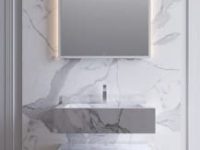
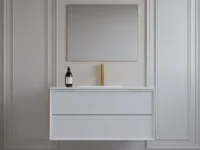
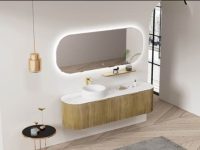
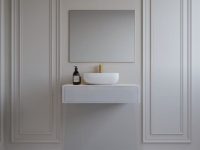
Size and proportion are the primary decisions once the technical specification is confirmed. A mirror that runs the full width of the basin unit below it creates a coherent, tailored look that makes the two pieces feel like part of a considered scheme rather than separate purchases. A mirror that is significantly narrower than the vanity tends to look underscaled; one that is wider introduces a sense of generous proportion that can make a smaller bathroom feel more spacious.
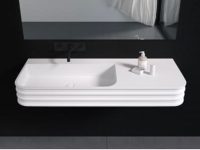
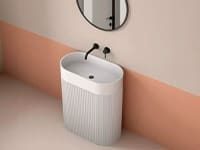
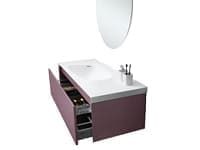
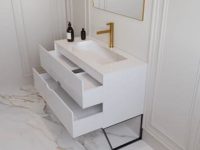
The bathroom vanity units in the UK available at our website are designed with this pairing in mind. The proportions of the vanity range are developed alongside the mirror collection so that the two work together visually, making it straightforward to build a bathroom scheme where every element feels resolved rather than assembled from unrelated sources.
Types of Bathroom Mirrors
Moisture-Resistant Mirrors
The phrase ‘moisture-resistant mirrors’ appears on a lot of product listings, but it is worth understanding what it refers to and what it does not. Moisture resistance describes the mirror’s ability to withstand the ambient humidity of a bathroom environment, the condensation that forms on surfaces during and after showering, and the general elevated humidity of a room in daily use. It is not the same as being waterproof. A moisture-resistant mirror should not be installed directly in the spray zone of a shower, and it should not be exposed to direct water contact.
What moisture resistance means in practice is that the mirror can be installed in a normal bathroom location, above a basin, on a wall opposite a shower, or in an en-suite, without degrading at the rate a standard decorative mirror would. The protection is meaningful, and the difference in longevity compared to an unrated mirror in the same location is substantial.
Anti-Fog Mirrors
One of the most genuinely useful innovations in bathroom mirror design is the integrated demister. Anti-fog bathroom mirrors incorporate a low-wattage heating pad bonded directly behind the glass. When the bathroom light is switched on, or in some models via a separate switch, the pad gently warms the glass surface above the dew point. Condensation cannot form on a surface that is warmer than the surrounding air, which means the mirror remains clear throughout a shower rather than fogging over the moment steam enters the room.
The practical difference this makes to a morning routine is not trivial. Without a demister, the mirror is unusable for several minutes after showering, which is precisely when most people want to use it. With a demister running, the mirror is ready the moment you step out. For anyone who showers before grooming, this is a feature that improves daily life in a quiet but consistent way.
Illuminated Mirrors
The lighting in most bathrooms is designed for the room, not for the mirror. Ceiling-mounted lights cast shadows on the face, particularly under the chin and around the eyes, which makes grooming tasks considerably harder than they need to be. An illuminated mirror addresses this directly by positioning the light source at eye level and directing it toward the face rather than down from above.
LED strips around the perimeter of the mirror produce an even, shadow-free wash of light that is both flattering and practical. Backlit mirrors, where the LEDs are positioned behind a frosted panel rather than around the edge, produce a softer, more diffused glow that works well as ambient light for the room as a whole. Both are bathroom mirror materials and configurations designed specifically for bathroom use, with sealed LED units that are rated for humid environments.
Final Thoughts
Bathroom mirrors are a distinct product category, not simply decorative mirrors repurposed for a wet room. The construction differences, protected backing, safety glass, edge sealing, and, in better models, the integration of demisters and LED lighting, are all responses to the specific demands of the environment. Choosing a mirror that is genuinely built for that environment is one of the simpler decisions in a bathroom renovation, and one where getting it right requires very little additional effort. Browse the mirror range at our website, the most trusted basin company in London, alongside our wider bathroom collection to find pieces that work together as a complete, considered scheme.
